
No trip to Barcelona is complete without visiting a Tapas bar (or three). Just don’t let that be where your culinary explorations end. There’s so much more to be tasted and experienced in this ancient Catalonian capital.
Not sure where to start? Keep reading. This article will take you on a tour through Barcelona’s food history, markets, classic dishes, and the hot spots redefining the city’s cuisine for a new era. If you want to experience food in Barcelona that you can’t find anywhere else, consider this the perfect guide.
Table of Contents
What “Local Flavors” Really Mean in Barcelona
Though Tapas bars are one of the first things tourists seek out in Barcelona, they’re a southern Spanish creation, not native to the city. Few flavors are, in fact. What makes Barcelona unique is all the different influences that have gathered there over its 2000-year history.
Roman rule brought olives and wines to the region, while an 85-year Islamic occupation is often credited with introducing rice into the local dishes, as well as richer spices and herbs. Saffron’s presence in Catalan cuisine, for example, links all the way back to medieval spice trading and Arabic merchants. The city also has a large South American population that has put an added Latino spin on local dishes.
All the different cultures that have collected in Barcelona, alongside the rich coastline and mountains it sits between, have created an array of local flavors that can’t be summed up in a single sentence, let alone a single dish. That’s why the best Barcelona food tours will always include bars and restaurants that touch on all these points. The trick with getting to know the local flavors of Barcelona is to try as much as you can.
3 Classic Catalan Dishes That Go Beyond Tapas
Barcelona is a Mediterranean city, and classic Catalan food reflects that. Think lots of vegetables and fish, as well as heartier beef and pork dishes. The city also has a bit of a sweet tooth with desserts that feature plenty of honey and sugar.
If you’re looking to taste beyond Tapas, here are three classic Catalan dishes that shouldn’t be missed:
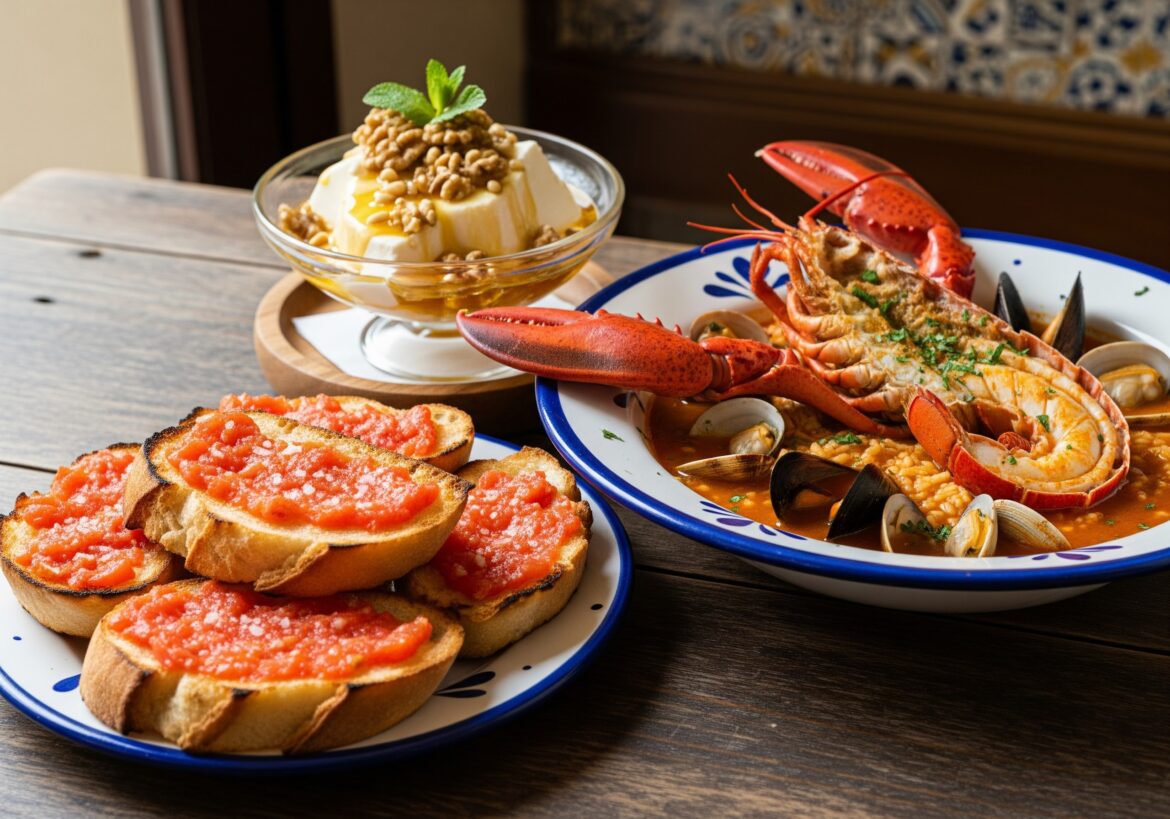
- Pa amb tomàquet: This translates to “bread with tomato,” but don’t let the dish’s simplicity fool you. You’ll find it at most Catalan tables, and what makes it special is the quality of the ingredients. Crusty, country bread is rubbed with fresh, flavorsome tomatoes (usually tomàquets de penjar) and garlic, and then finished off with a drizzle of olive oil and salt. It can be eaten as a meal or alongside one, perfectly complementing grilled sardines or vegetables.
- Arròs caldós amb llamàntol: “Soupy rice with lobster” is far more flavorsome than the name suggests. The base of it is “sofregit”, a fundamental part of most Catalan cuisine made up of onions and tomatoes slow-cooked in olive oil until tender and sweet. Picada, garlic, and herbs are all added to this, as well as lobster and seafood stock. It’s brothy, delicious, and brings together some of the best flavors of Barcelona into one meal.
- Mel i Mató: Honey and curds aren’t most people’s go-to dessert order, but in Barcelona, it should be. The dessert pairs nuts and honey with mató, a cheese similar to ricotta, made from goat’s or cow’s milk that you only find in Catalonia. It’s simple and rich all at once, and as legendary Catalan chef Jose Andres describes in this clip, it’s a deeply nostalgic dish for many.
Neighborhood Markets That Reveal the City’s True Food Culture
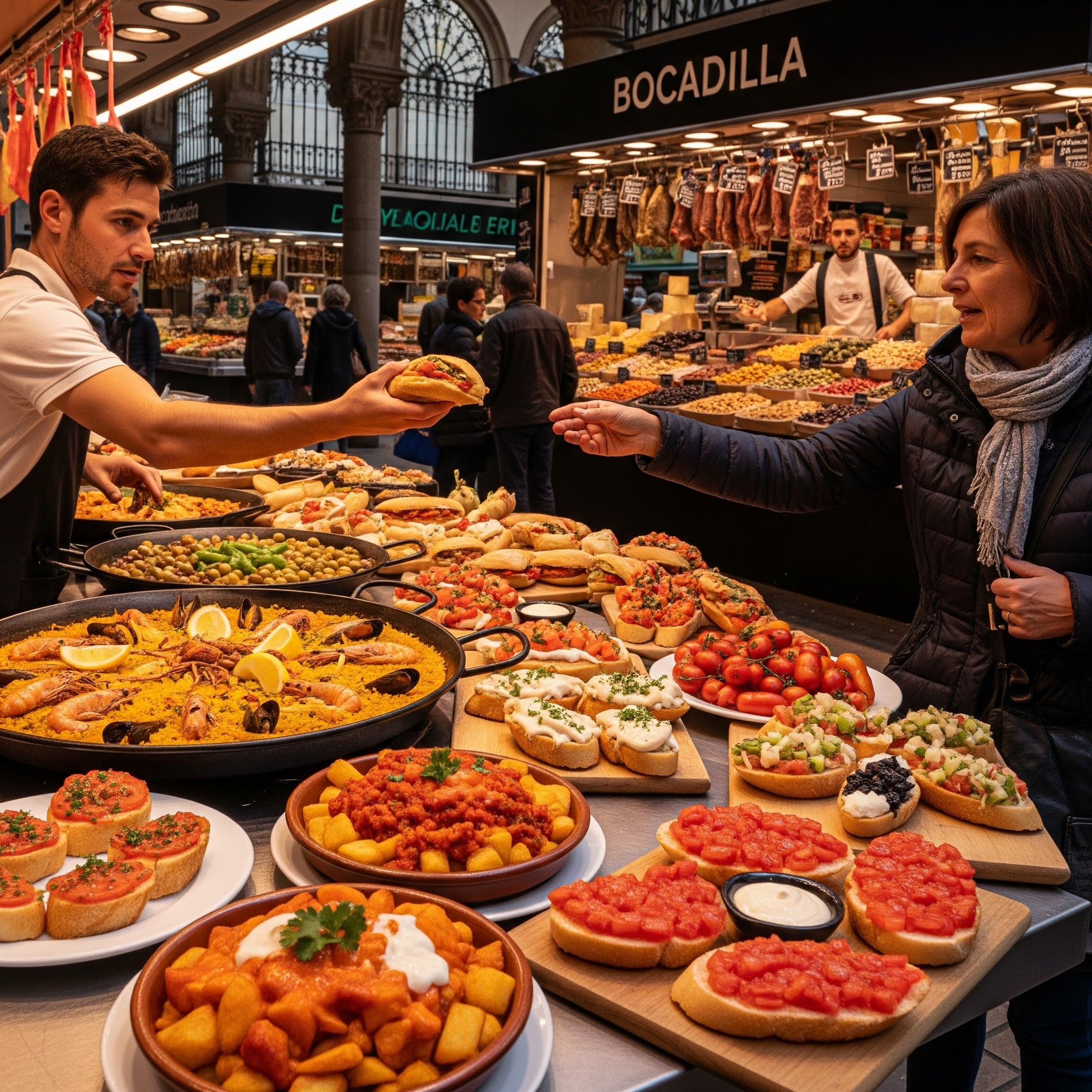
The public food markets are such a big part of Barcelona’s food culture that academic researchers have studied them and the urban food systems they’ve created. La Bocqueria is the main one that tourists are told to visit, and as spectacular as it is, that’s not where the locals are shopping.
Mercat Abaceria has more reasonable prices and a more down-to-earth vibe than some of the bigger markets. Mercat de Galvany also caters more to locals than tourists. What makes many of the markets like Mercat De Sant Antoni worth the visit isn’t just the incredible food, but the ornate buildings they’re often located in. Wherever you choose to go, just make sure you allow yourself lots of browsing time. There’s so much to taste and try at these markets.
3 Local-Favorite Spots and Hidden Eateries to Try
There’s no shortage of good food or restaurants in Barcelona. That said, many of them are overrun by tourists. Here’s where to go to avoid the crowds and experience a different side to Catalan cooking:
spanish snack tapas
- Soma: This relaxed neighborhood bistro serves food all day with dishes that are a fusion of Catalan and Italian influences. It’s an appropriate combination considering that the city was once a Roman outpost. The food itself is simple, seasonal, and shows off the very best ingredients of the region. Menu highlights include the veal cheeks and ceviche sea bass.
- Suculent: For elevated Catalan cuisine, you can do little better than Suculent. Head Chef Toni Romero is as skilled at paying homage to his Castellón upbringing as he is at reinventing it. The small, whimsical restaurant generally features dishes intended to be shared and relies on local, sustainable ingredients wherever possible. Stingray is one of the more unusual menu items and is very much worth trying. When in Barcelona, right?
- Casa Maians: Daily specials are written up on a mirror, and no matter when you visit, you’ll be treated to simple dishes and incredible service. If you want to dine like a local, this is the spot to do it. The seafood is fresh (order the cuttlefish if you can), and the atmosphere is wonderfully relaxed. You’ll get to taste and feel the full Catalan culture in this hidden gem.
From family-run kitchens to modern culinary innovators, Barcelona is full of places that serve far more than tapas. Use this guide to explore boldly, try something new, and taste the flavors that locals love most. Your next favorite dish is waiting.
*This article has been contributed to Owl Over The World.
