
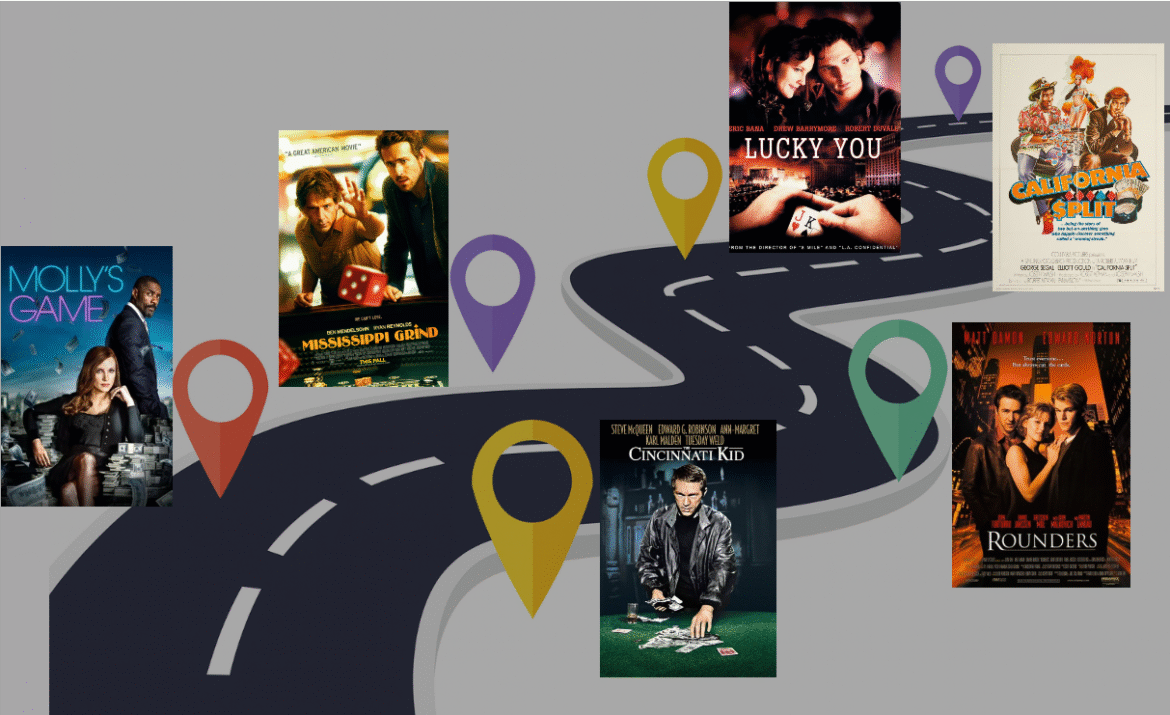
Poker movies sell a specific kind of romance – dim rooms, clacking chips, and cities that feel like they’ve got a secret second life after midnight. But if you’ve ever tried to travel “like the movie,” you’ve probably hit a wall: the room is gone, the street looks nothing like the shot, or the “location” was never real in the first place. This guide is built for film fans who want the vibe without the letdown. It focuses on what’s still visitable, what’s changed, and how to plan smart.
Key takeaways
- Many iconic real money poker scenes were filmed in stand-in cities – verify before you book.
- You can still chase the mood of the films by targeting neighborhoods, not single addresses.
- A good poker-movie trip is about atmosphere, history, and shots you can recreate – not about finding a specific table.
- Plan for closures and rebrands, especially in New York and the Gulf Coast.
Table of Contents
What Fans Get Wrong About Poker Movie Travel
The niche problem is simple: poker movies are masters of illusion, and travel-planning websites rarely explain which locations are real, which are composites, and which have vanished. Fans tend to Google a single “filming address,” book flights, and arrive to find a renovated bar or a totally different city. Another common miss is forgetting time – many classics lean on late-90s or early-2000s interiors that no longer exist. The fix isn’t giving up. It’s traveling by story geography – the real-world places that still carry the visual DNA of the film.
The Poker Movies This Guide Is Based On
To keep this guide concrete, every stop below ties back to one of these films. Think of them as your “source map” for planning.
- Rounders and New York Poker Aesthetics
Rounders is basically a postcard of gritty late-90s NYC – neighborhood bars, low-lit back rooms, and sketched-out corners of Manhattan. Even when exact interiors changed, the texture is still there if you visit the right blocks.
- Molly’s Game and Private Club Mythology
Molly’s Game leans on upscale Manhattan energy – hotel lobbies, polished cocktail spaces, and a hush-hush “private club” vibe. The real locations are scattered, but the film’s atmosphere maps well to today’s midtown and West Side hotels.
- Mississippi Grind and the River Journey Backdrop
This one is road-trip America with a gambler’s heartbeat – motels, river towns, and old-school casinos along the Mississippi corridor. A lot of the filming was on location, which makes it unusually travel-friendly.
- The Cincinnati Kid and the Southern Card Room Era
A New Orleans-rooted classic that blends steamy Southern streets with smoky interiors. Some spots are gone, but the French Quarter and nearby stretches still feel like the movie in the right light.
- California Split and the Classic West Coast Look
Altman’s cult film uses California’s sun-bleached realism – card rooms, diners, and lived-in city streets. It’s less about a single place and more about regional style.
- Lucky You and the Modern Vegas Tournament Setting
Vegas on screen often gets caricatured. Lucky You is one of the few that captures a more “real” mid-2000s Strip and downtown transition era – useful if you want cinematic Vegas without the theme-park feel.
How to Verify Real Filming Spots Versus Look-Alike Sets
Before you chase a location, do a 10-minute reality check. It’s the easiest way to avoid the classic “wrong city, wrong room” problem.
Common Types of Location Substitutions in Poker Films
Poker films usually fake places in three ways:
- City doubles – Toronto for New York, New Orleans for “anywhere humid.”
- Interior swaps – a real exterior shot paired with a studio-built room.
- Composite spaces – two or three bars edited into one “movie location.”
Here’s a quick comparison of what that means for your trip:
| Film cue you see | What it often is in real life | How to plan around it |
| Exterior street shot | Real address | Visit the block, not just the doorway |
| Back-room poker scene | Studio or another city | Look for a nearby bar with similar vibe |
| Casino floor montage | Mixed properties | Treat it as a neighborhood mood board |
Pro tip: If a scene cuts from a street to an interior in under two seconds, that’s your red flag for a swapped interior.
Simple Ways to Cross-Check Locations Online
Use a tight workflow:
- Search for the film + “filming locations.” Favor reputable film-location databases and studio notes.
- Cross-reference with Street View. You’re checking architecture and block layout, not signage.
- Verify by screenshot matching. Compare window shapes, corners, and skyline angles.
- Check recent reviews. Yelp and Google reviews will tell you if a place was renovated or renamed.
- Bookmark a “Plan B” nearby. If the address fails, you still get the vibe.
Quick win: Save 3–5 stills from the film on your phone and match them in real time on the street.
What to Expect When a Place Has Been Renovated
Assume change, especially in major cities. In practice:
- Exteriors survive longer than interiors.
- Neighborhood energy sticks. Even if a bar is gone, the block often feels right.
- Weekday afternoons are your friend. You’ll get cleaner photo angles and less crowd noise.
Watch out: Rebranded venues sometimes lean into the movie connection online but look nothing like the film inside.
New York City Film Trail Inspired by Rounders and Molly’s Game
New York is the hardest place to travel “exactly,” but the easiest place to travel “accurately.” The goal is to hit clusters that still read like the films.
Neighborhoods That Match the Films’ Mood
Start with neighborhoods that keep the right visual language:
- Lower East Side and Alphabet City – narrow streets, older brick, late-night grit.
- Chelsea and Hell’s Kitchen edges – midtown polish without full tourist gloss.
- Brooklyn waterfront pockets – industrial textures that echo Rounders’ working-class tone.
Bars, Diners, and Streets Linked to Key Scenes
Instead of one exact “movie bar,” aim for a set of stops:
- Classic East Village bars with tight interiors and low ambient light.
- All-night diners near NYU and Union Square for that post-hand vibe.
- West Side hotel corridors and lobbies that mirror the high-end hush of Molly’s Game.
Pro tip: NYC bars rotate ownership fast. If the “correct” place is gone, pick a bar with the same floor plan – long counter, back booths, minimal windows.
Photo Friendly Stops and Best Times to Visit
For clean shots:
- Go early Sunday morning for empty sidewalks.
- Use blue hour (20–30 minutes after sunset) to recreate neon-heavy Rounders lighting.
- Plan a walking loop under 2 miles – NYC vibes fade when you’re in transit too long.
Riverboat and Road Trip America From Mississippi Grind
Mississippi Grind is your best bet for a film-accurate road trip because so much of it lives in real, still-operating river towns.
Mississippi River Towns With On-Screen DNA
Good stops that still feel like the film:
- Memphis, TN – blues district, grit plus riverfront visuals.
- Tunica, MS area – casino corridor energy without Vegas scale.
- Vicksburg, MS – scenic river town mood and older storefronts.
Louisiana Stops That Still Feel Like the Movie
Louisiana gives you the heat and texture:
- Baton Rouge edges for that “on the move” highway atmosphere.
- New Orleans’ approach roads that echo the film’s final stretch.
- Small bayou towns for the lived-in, slightly off-map feeling.
How to Plan the Route by Car Without Overpaying
A simple, film-buff-friendly approach:
- Fly into Memphis. It’s the cleanest start point.
- Rent a car with unlimited miles. River routes are detour-heavy.
- Book mid-range motels, not resorts. Better match to the movie tone.
- Drive in daylight, scout at dusk. That’s when the landscapes read most cinematic.
- Leave one “flex day.” Small towns reward wandering.
Pro tip: Don’t cram more than 3 towns into a weekend – the film’s pace is slow for a reason.
Las Vegas Through a Poker Movie Lens Without the Tourist Traps
Vegas is perfect for poker-movie travel if you sidestep the loudest clichés.
Downtown and Off-Strip Areas That Look Cinematic
For Lucky You and California Split energy, prioritize:
- Fremont East for neon grit and older signage.
- Arts District for wide streets and unpolished textures.
- Off-Strip motel corridors that still feel mid-2000s.
Hotels, Lobbies, and Views That Scream Poker Movie
You’re hunting visuals:
- Low-ceiling, warm-lit lobbies rather than giant atriums.
- Older escalator banks and carpeted corridors – pure Lucky You era.
- Strip skyline overlooks from pedestrian bridges at night.
Budget Tips for Experiencing Vegas Like a Film Buff
A fast list of money-savers that don’t break the vibe:
- Stay one block off Strip – often half the price.
- Walk north to south, not zig-zag – saves rideshare churn.
- Eat at legacy diners instead of celebrity spots.
- Spend on one great night walk, not three average ones.
Watch out: “Movie-themed” tours in Vegas are often casino-first, film-second. Build your own route.
*This article has been contributed to Owl Over The World.
