

Whether you’re a digital nomad, travel content creator, or simply someone exploring a new destination, staying connected while traveling is no longer a luxury — it’s one of the most important parts of the trip itself. Whether it’s for work, navigating unfamiliar streets with Google Maps, or uploading an Instagram story to tease your friends back home, no one sets off on a trip these days without figuring out how to stay online.
I’ve now traveled to over 50 countries in the last 10 years and have tested all kinds of ways to stay connected while traveling — some better than others. And after trying nearly every option, I now rely almost exclusively on eSIMs, with Sim Local quickly becoming my preferred provider (more on that below).
In this article, I’ll walk you through the best ways to stay connected while abroad — including pros, cons, real-world advice, and my personal go-to solution — plus a few bonus tips on how to avoid roaming charges when traveling and the cheapest way to get internet while traveling abroad.
Let’s dive in.
Table of Contents
Why Staying Connected While Traveling Matters in 2026
Ten years ago, WiFi cafés and occasional roaming were enough for most trips. But in 2026, staying connected while traveling is essential for almost every part of the journey. From navigating a new city with Google Maps to using ride-hailing apps, translating menus, mobile banking, or showing digital boarding passes, your smartphone is the lifeline of your trip.
And it’s not just about convenience — having reliable internet access abroad also means:
-
Safety: Access maps, emergency numbers, and local info instantly.
-
Flexibility: Book last-minute hotels, tours, or transport on the go.
-
Sharing: Stay in touch with friends, post updates, and upload content.
-
Work & remote life: For digital nomads and business travelers, connection is non-negotiable.
That’s why knowing the cheapest way to get internet while traveling abroad and how to avoid roaming charges when traveling is more important than ever.
5 Best Methods to Get Internet While Traveling Abroad
International Roaming Plans
I’d typically say that this is one of the worst (out of the best) ways to stay connected while traveling abroad, for the main reason that it’s usually extremely expensive. I’ve personally done it only once or twice on short trips in non-EU countries, where the cost for enabling roaming wasn’t that bad.
I say “usually” because the cost will vary depending on your mobile operator, home country, and where you’re traveling to — but you can always check in advance and decide for yourself. For me, honestly, with all these other options available, it just doesn’t make sense.
✅ Pros: No setup needed, works instantly
❌ Cons: Can get very pricey, watch out for data limits or shocking bills
🎯 Best for: Short trips or when you need a quick backup and don’t mind the cost

Local SIM Cards
This used to be my favorite and go-to method for staying connected while traveling, and I’ve bought local SIM cards in probably 20+ countries.
Buying a local SIM card usually gives you the best value for money — especially if you’ll be in one country for a while. The downside is that it can be a time-consuming hassle. You need to find a local store, possibly deal with a language barrier, and then go through the physical setup.
For example, in China, we lost perhaps a whole hour — and not even because of the language, but just because the setup process was slow and bureaucratic.
✅ Pros: Usually cheap, fast local speeds, easy to find in airports or shops
❌ Cons: Takes time, setup can be frustrating, may need ID/passport, won’t work across borders
🎯 Best for: Long-term stays in one country and budget-conscious travelers

Travel eSIM Cards: The Best Way to Stay Connected Abroad in 2026
I only started using eSIM cards fairly recently, but honestly, I don’t think I’ll ever go back. The setup is incredibly easy: you choose a provider online (there are plenty of options now), download their app or scan a QR code, and boom — you’re connected. No physical SIM swap, no waiting in line at the airport, and no stress about language barriers.
It’s also a game-changer when traveling between countries, especially in regions like Europe or Southeast Asia. You just pick a regional plan that covers multiple countries, and you’re connected the moment you land.
This is where the eSIM vs physical SIM card for travelers comparison is clear: eSIMs save you time, avoid paperwork, and work across borders, while physical SIMs may be slightly cheaper but require effort and setup.
Not every phone supports eSIM yet, but if yours does, it’s hands down the most convenient way to stay connected while traveling abroad.
✅ Pros: No physical SIM swap, instant setup, regional/global coverage, flexible plans
❌ Cons: Requires an eSIM-compatible device, slightly more expensive than local SIMs (but worth the time saved)
🎯 Best for: Anyone who wants to hit the ground running
Portable (Pocket) WiFi Devices
A pocket WiFi is basically a small router you rent (or buy) that provides internet access to your devices wherever you go. I gave it a try some years ago, but I haven’t used it much. Some people swear by it, but I never found it very practical.
It’s great if you’re traveling as a group and want to share a connection. But it also means carrying (and charging) yet another device — and that’s usually not worth it for me.
✅ Pros: Good for groups, can connect multiple devices
❌ Cons: Expensive, bulky, needs charging, extra device to manage
🎯 Best for: Group travel, families, or people with multiple devices, like digital nomads

Free WiFi Networks
Let’s be honest, everyone relies on free WiFi to some extent while traveling. Airports, hotels, cafes, and even buses sometimes offer it. But depending on it as your main method of staying connected is… risky.
It’s often slow, unreliable, and not very secure. Not great for work, video calls, or accessing anything sensitive. Still, it can be a handy backup, especially when you don’t want to burn through data.
✅ Pros: Free, easy to find in most cities
❌ Cons: Unreliable, insecure, not available everywhere
🎯 Best for: Light users or as a backup when you’re near a hotspot

Complete eSIM Guide for Travelers
An eSIM (short for embedded SIM) is a digital SIM card built into your device. That means no physical card to insert or swap. With most eSIM providers, you can activate mobile data just by scanning a QR code or downloading an app.
It works exactly like a traditional SIM card, just without the plastic. You can connect to local or global mobile networks, choose data plans, and manage everything straight from your phone.
Most modern smartphones support eSIMs (iPhone XS and newer, recent Samsung Galaxy and Google Pixel models, etc.), so chances are, if your phone is relatively new, you’re already eSIM-compatible.
Installing an eSIM is simple:
-
Choose a provider online.
-
Buy the plan that matches your trip.
-
Scan the QR code or download the app.
-
Connect instantly when you land.
That’s it — no store visits, no paperwork, no physical SIM swaps.
My Preferred eSIM Provider: Sim Local
I most recently used Sim Local during my trip to Cape Town, and it completely reinforced why eSIMs have become my preferred way to stay connected while traveling.
Before even boarding my flight, I had already installed the eSIM and activated everything in just a few minutes. The moment I landed in Cape Town, I was instantly connected. No airport SIM card queues, no searching for WiFi, and no wasting precious travel time trying to sort out mobile data after a long flight.
What really stood out to me was how flexible and affordable their plans are. You can choose exactly what you need — whether that’s 1GB for a quick city break, or an unlimited data plan for a longer vacation. They also offer regional and global plans, which are ideal if you’re doing a multi-country trip.
During my time in Cape Town, the connection was consistently fast and reliable, even while moving around different parts of the city. That’s exactly what you want when you’re relying on mobile data for maps, bookings, and everyday travel logistics.
Besides the ease of setup, their network quality has been great as well. Fast, stable, and reliable, even in more remote spots. And compared to traditional roaming or some other eSIM providers I’ve tried, Sim Local had some of the best eSIM plans for most destinations I checked.
They also have physical kiosks and vending machines at airports like London Heathrow, Madrid, and several others — which is great if you want to grab one last-minute, but honestly, their digital eSIM is even easier.
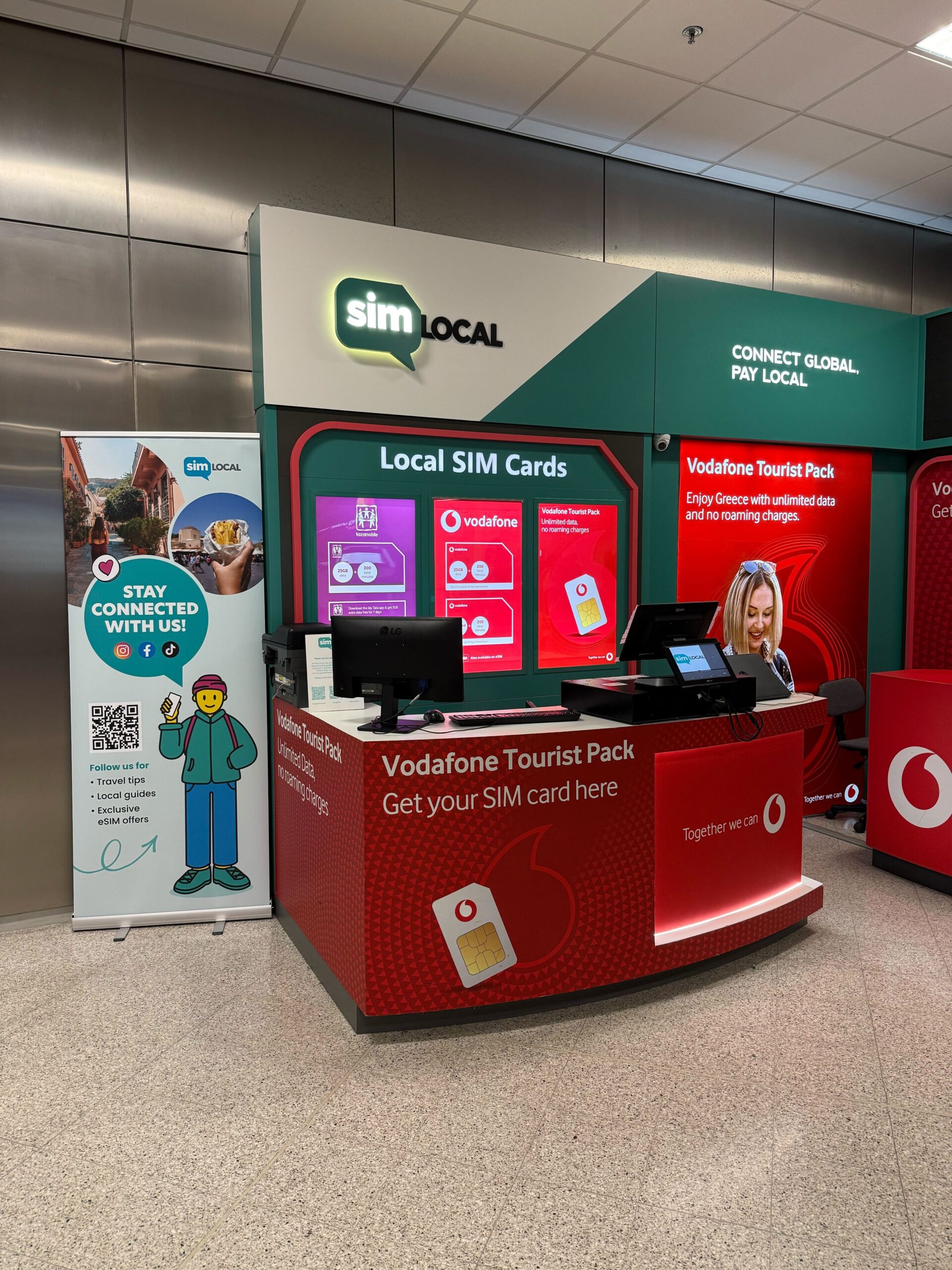
So, if you’re looking for the best way to stay connected while traveling abroad, Sim Local’s eSIM is a solid choice, especially if you want to save time, money, and avoid the usual SIM card headaches.
💸 Try it for yourself and save. Use my discount code [OWLOVERTHEWRLD] to get the cheapest eSIM deal for your next trip.
Why Sim Local is the Best eSIM for International Travel in 2026
Why Sim Local is one of the best eSIM providers for international travel in 2026:
-
Coverage in 220+ destinations worldwide – you’ll stay connected anywhere you go.
-
Strong partnerships with local providers – this ensures excellent coverage and competitive pricing, so you get the feeling of “traveling like a local.”
-
Flexible plans – from 1GB for a quick weekend trip to unlimited data for longer vacations.
-
Find ”My Plan” tool – helps you pick the best plan based on your trip length and data needs.
-
Transparent pricing – for example, a 5GB plan can cost as little as €15 (around €2/day), which makes it one of the cheapest ways to get internet while traveling abroad.
-
24/7 WhatsApp support – so if anything goes wrong, help is instant.
-
Hassle-free refund policy – if your eSIM doesn’t work, you get a full refund, no questions asked.
-
Simple setup – buy online, scan the QR code, and activate instantly. Or, if you prefer, grab one from Sim Local kiosks and vending machines at airports like London Heathrow, Madrid, and Athens.
Frequently Asked Questions
What is the cheapest way to get internet abroad?
The cheapest way usually depends on your travel style and destination. For long stays in one country, a local SIM card often gives you the best rates. For short trips or multi-country itineraries, eSIMs are usually the most cost-effective and hassle-free option. Free WiFi is free, of course, but it’s not reliable enough to be your only method.
How does an eSIM work?
An eSIM is a digital SIM built directly into your phone. Instead of inserting a physical SIM card, you download a mobile plan digitally (often by scanning a QR code or using an app). It works exactly like a physical SIM, giving you access to local mobile networks abroad.
Are eSIM cards safe?
Yes, eSIMs are safe. They use the same mobile network technology as traditional SIM cards, just without the physical plastic. In fact, they can be more secure because they can’t be lost, stolen, or swapped without your consent.
When is an eSIM activated?
In most cases, an eSIM activates automatically once you arrive in the country you purchased the plan for and connect to the local network. Some providers allow you to choose your start date during purchase, while others activate the moment you install it. With Sim Local, for example, you can install the eSIM before your trip, and it will only kick in once you land in your destination, so you don’t waste any data.
Which eSIM is best for Europe?
For Europe, choose a regional eSIM plan that covers multiple countries. Sim Local offers Europe-wide eSIMs that enable seamless travel across borders without the need to switch SIM cards. It’s the easiest way to stay connected when visiting multiple destinations on a single trip.
Do eSIMs work in China?
Yes, and in fact, eSIMs are a better option than physical SIM cards in China. As I shared above, buying a local SIM in China was very time-consuming. Additionally, we had to juggle several VPN apps to access essential and everyday apps like Google, Instagram, YouTube, and WhatsApp. eSIMs providers for China come with built-in solutions that bypass the “Great Firewall,” meaning you don’t need to install or switch between VPNs to access your apps. It saves time and hassle, and gives you smoother connectivity right away.
Is it better to use roaming or eSIMs abroad?
Traditional roaming with your home SIM can get very expensive. eSIMs generally offer cheaper data plans and more flexibility. Unless your carrier offers a special roaming package, eSIMs are usually the smarter choice.
Can I use both my home SIM and an eSIM at the same time?
Yes. Most modern smartphones let you use your physical SIM and an eSIM at once. That means you can keep your regular number active for calls and texts while using the eSIM for affordable data.
Do I need WiFi to install an eSIM?
Yes, you’ll need an internet connection to download and activate your eSIM — either WiFi at home, at the airport, or through your home SIM. Once it’s installed, you can use it just like a regular SIM.
Final Thoughts…
Staying connected while traveling abroad in 2026 is no longer complicated. You’ve got options — from roaming to local SIMs, pocket WiFi, and free hotspots — but eSIMs are the smartest choice if you want to save money, save time, and avoid roaming charges when traveling.
Personally, I now rely almost entirely on eSIMs, as they’ve proven to be the most flexible and practical solution for my type of travel.
💸 Ready to save on data and compare eSIM vs a physical SIM card for travelers? Get your Sim Local eSIM today and use my code [OWLOVERTHEWRLD] for an exclusive discount.
I hope that this article has given you a good understanding of how to stay connected while traveling abroad. If you have any additional questions or comments, please let me know in the comment section below, and don’t hesitate to contact me.
If you like this post, please share it with your friends and follow Owl Over The World on Facebook, Instagram, and TikTok for more travel tips & inspiration.
Thank you for reading,
Bilyana
