
Venice is more than just a city; it is a living museum, a floating labyrinth of marble and water that has captivated the human imagination for over a millennium. Whether through the lens of a Leica or the cinematic eye of a Hollywood director, the “Serenissima” offers a visual language unlike any other place on Earth. Its unique interplay of light reflecting off the Adriatic and the decaying grandeur of Gothic architecture makes it a perennial favorite for artists.
For those planning to capture the city’s essence, FREETOUR.com https://www.freetour.com/venice offers guided insights into the hidden corners that often escape the average tourist’s gaze. Below, we explore the locations that have defined Venice’s image in global culture.
Table of Contents
The Most Iconic Film and Photography Spots in Venice
Capturing Venice requires an understanding of both its grand stages and its quiet, decaying corners. The following locations have served as the backdrop for some of the most memorable moments in cinema and photography history.
1. Piazza San Marco (St. Mark’s Square)
Often referred to as “the drawing room of Europe,” Piazza San Marco is the heart of Venice. It is the city’s only “Piazza” (the others are “Campi”) and is framed by the Basilica di San Marco, the Campanile, and the Procuratie.
- Cinematic Legacy: This spot is most famously seen in Luchino Visconti’s Death in Venice (1971) and Indiana Jones and the Last Crusade (1989), where the square serves as the entrance to a hidden library.
- Photography Tip: To avoid the throngs of tourists and pigeons, arrive at blue hour—just before sunrise. The wet Istrian stone reflects the golden glow of the mosaics of the Basilica, creating a surreal, ethereal atmosphere.
2. The Rialto Bridge and Market
The Rialto is the oldest of the four bridges spanning the Grand Canal. Its distinct stone arch and rows of shops make it an architectural icon.
- Cinematic Legacy: The Rialto area was a central location in Casino Royale (2006). While the “sinking house” from the film’s climax was a set, the surrounding vistas of the Rialto capture the high-stakes tension of James Bond’s Venice.
- Photography Tip: Instead of shooting from the bridge itself, go to the Riva del Vin at sunset. You will get the full profile of the bridge with the gondolas passing underneath, illuminated by the warm Italian sun.
3. The Bridge of Sighs (Ponte dei Sospiri)
This enclosed white limestone bridge connects the Doge’s Palace to the New Prison. Legend says its name comes from the sighs of prisoners who saw their last glimpse of Venice through the windows before being taken to their cells.
- Cinematic Legacy: A pivotal romantic scene in A Little Romance (1979) revolves around the legend that lovers will be granted eternal love if they kiss under the bridge at sunset.
- Photography Tip: The best view is from the Ponte della Paglia. Use a long exposure to blur the movement of the gondolas passing beneath the bridge for a ghostly, romantic effect.
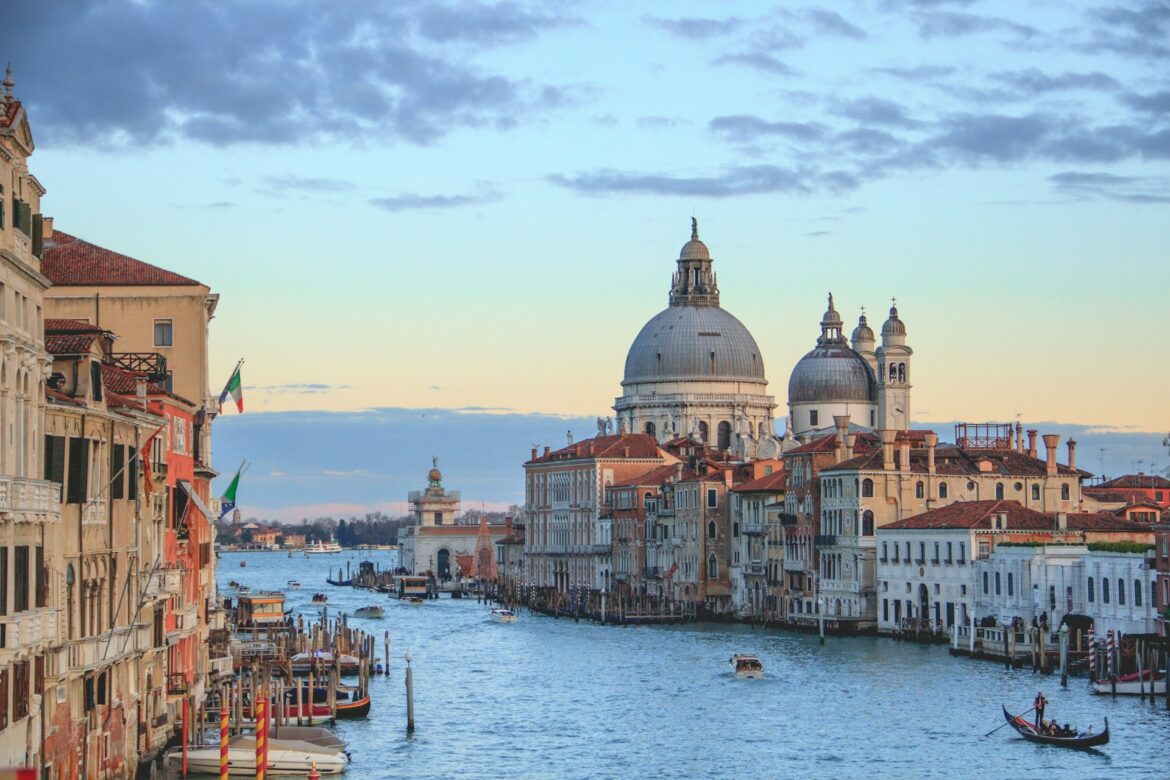
4. Santa Maria della Salute
This octagonal baroque church sits at the entrance of the Grand Canal. Its massive domes are one of the most recognizable silhouettes in the Venetian skyline.
- Cinematic Legacy: It features prominently in the background of The Talented Mr. Ripley (1999), symbolizing the sophisticated but dark allure of the city.
- Photography Tip: For the “postcard” shot, head to the wooden Ponte dell’Accademia. This vantage point provides the classic curve of the Grand Canal leading directly to the Salute’s domes.
5. The Island of Burano
While technically a short boat ride from the main city, Burano is a photographer’s dream due to its neon-colored houses. Originally painted brightly so fishermen could see their homes through the thick lagoon fog, it is now a strictly regulated rainbow of architecture.
- Visual Appeal: It is a favorite for fashion photography and travel documentaries. The contrast between the bright walls, the green canal water, and the laundry hanging between windows offers a “Pop Art” aesthetic within a traditional setting.
The Cinematic Soul of Venice
Venice is inherently theatrical. The lack of cars means that the city sounds different—footsteps on stone and the lap of water replace the hum of engines. This acoustic environment, combined with the lack of modern infrastructure, allows filmmakers to shoot period pieces with minimal CGI.
According to Wikipedia’s entry on Venice, the city has been a major Mediterranean maritime power and a center of commerce and art for centuries. This historical weight is felt in every frame of film shot here. From the dark, moody alleyways used in Don’t Look Now (1973) to the opulent palazzos in The Wings of the Dove (1997), Venice can shift from romantic to menacing in the blink of a shutter.
Practical Tips for Photographers and Filmmakers
If you are traveling to Venice to document its beauty, keep these logistical points in mind:
- Acqua Alta (High Water): During autumn and winter, the city occasionally floods. While this can be a logistical nightmare, it creates incredible reflections in Piazza San Marco, effectively turning the square into a giant mirror.
- The Vaporetto View: The Line 1 Vaporetto (water bus) travels the length of the Grand Canal. If you can snag a seat at the very front or back, it serves as a moving dolly shot, perfect for capturing the façades of the Palazzi.
- Hidden Gems: Beyond the main sites, explore the Cannaregio district. It is the site of the historic Jewish Ghetto and offers a more “authentic,” gritty look at Venetian life compared to the polished areas around San Marco.
*This article has been contributed to Owl Over The World.
**Featured photo is by Henrique Ferreira on Unsplash
