

Rio de Janeiro is one of the most exciting cities in the world, a place where dramatic mountains meet endless beaches, and colorful neighborhoods pulse with life. But traveling to Rio, especially for the first time, can feel overwhelming if you don’t know what to expect.
Before we traveled there, I read dozens of articles and posts online — and still, there were a lot of things nobody really explained properly ( or maybe I just didn’t find the proper info). So, after spending three full weeks in the city, I put together this guide in which I’m sharing everything you need to know before visiting Rio de Janeiro for the first time.
From how to get around and where to stay in Rio de Janeiro to safety, language, and more, this Rio de Janeiro travel tips guide covers everything I wish someone had told me ahead of time.
No sugar-coating, no clickbait, just honest, practical advice to help you make the most out of your time in Rio.
Table of Contents
My Best Rio de Janeiro Travel Tips and Things to Know Before Visiting
Is Rio de Janeiro Safe for Tourists?
I can’t start a guide of Rio de Janeiro travel tips and things to know before visiting without addressing what everyone worries about first – safety.
Here are my two cents on the topic: Rio de Janeiro is much safer than the mass media and social media make it seem, but you still need to be careful.
We spent three weeks exploring Rio, and we didn’t have a single problem. We walked around different neighborhoods, used public transportation, visited busy areas and quieter ones, and never felt unsafe.
That being said, you should always use common sense and avoid putting yourself in situations that might compromise safety.

Here are a few Rio de Janeiro safety tips to avoid any problems:
- Use a secondary phone if possible, or delete sensitive apps like banking apps
- Don’t walk alone at night, especially in areas without many people
- Be careful on the beach and don’t leave your belongings unattended
- Be aware of pickpocketing and don’t keep valuables such as your phone in your back pocket or unzipped bag, etc.
- Be extra careful when going out at bars and clubs, as under the influence of alcohol, you become an easier victim, and stories of people’s drinks being spiked aren’t unheard of
I honestly believe that it is also a lot about being lucky or being unlucky by being at the wrong place at the wrong time, which is something you can not predict, unfortunately.
For example, another couple staying in our guesthouse in Santa Teresa were robbed at gunpoint, right outside the house. Their phones were taken, and they were pressured to give up their bank logins — something that can wipe out your savings in minutes.
So, it isn’t about the phone theft itself that’s the real danger — it’s being forced to unlock your banking apps at gunpoint.
And after talking to a few locals, we learned this is a common issue for both tourists and residents. That’s why I recommend using a second phone or, like I did, uninstall your sensitive apps and only transfer small amounts through apps like Revolut.
And if you’re interested in visiting the favelas, you can read here about my experience visiting favela Rocinha.

How to Get Around Rio de Janeiro?
Getting around Rio de Janeiro is actually pretty easy once you understand how everything works, but there are a few things you should know to avoid frustration.
Uber is the most popular way for tourists to get around Rio, and we used it a lot ourselves. It’s safe, affordable, and usually reliable. That said, we visited during January, which is the high season, and it was sometimes a nightmare trying to get a driver.
We often had to wait a long time for someone to accept the trip, and even then, there were many times when they accepted only to cancel right afterward. It didn’t happen every time, but it did happen a lot. So, if you’re visiting Rio during a busy time of year, just be aware that Uber might not always be as instant as you expect.
Another option you shouldn’t overlook is using regular taxis. Honestly, we had good experiences with taxis in Rio – much easier to get than an Uber and pretty much offer the same price.
But what almost no tourist talks about – and is one of my best Rio de Janeiro travel tips – is Rio’s public transportation. The metro and buses are cheap, efficient, and safe to use. We personally used them a lot, and they saved us both time and money. It might not be the ”sexiest” way of getting around Rio de Janeiro, but it’s definitely the smart one if you’re planning to stay longer or move around a lot.


How Bad is the Traffic in Rio de Janeiro?
Another thing you should know before visiting Rio de Janeiro is that the traffic can be horrible. Rio is a massive, sprawling city, and traffic jams are common, even for short distances.
We almost didn’t make it to the beach for New Year’s Eve because we were stuck in traffic for way longer than expected.
Tips for dealing with traffic in Rio:
- Always allow extra time when you need to be somewhere (like the airport, bus station, or tours).
- Double or even triple your expected travel time during holidays, weekends, or major events.
If you don’t plan accordingly, you might end up missing your flight or an event simply because you underestimated how bad it can get.

What Language Do They Speak in Rio de Janeiro?
The official language in Brazil is Portuguese, and no, English is not widely spoken even in touristy areas like Copacabana and Ipanema.
And while you can definitely survive without speaking Portuguese, I always recommend learning a few basic phrases in the local language to make your life so much easier — and locals really appreciate the effort.
Here are a few basics to get you started:
- Olá — Hello
- Obrigado/Obrigada — Thank you (male/female)
- Por favor — Please
- Quanto custa? — How much is it?
- Sem açúcar — Without sugar (very important for coffee or juices!)
- Água sem gás — Still water
Also, make sure to download and have a translation app (like Google Translate) available, as you will need to use it a lot.

How to Stay Connected in Rio de Janeiro: SIM Cards and Mobile Data
One of the things I read before traveling to Brazil was that getting a local SIM card would be a nightmare without a CPF number.
… and that turned out to be wrong.
It was actually very easy to get a local SIM card in, and it cost way less than buying an eSIM (which is what I typically do).
We got two prepaid SIM cards with TIM for around €7 total, and we recharged them once for about €2.50 each. That was more than enough to have internet throughout our entire Brazil trip of over a month.
And to be completely transparent, we bought our local SIM cards while exploring São Paulo, but I’m confident there are places in Rio where you can find a local SIM to buy without a CPF, too. The places that would sell you one are typically not the official branches, but smaller shops that could be found throughout the city, inside metro stations, etc.
Getting a local SIM is totally worth it and will make your life much easier while you’re in Rio.

Where to Stay in Rio de Janeiro? (Best Areas Recommendations)
Choosing where to stay in Rio de Janeiro can make or break your experience.
During our three weeks there, we stayed in four different areas – Estácio, Santa Teresa, Lagoa, and Jardim Botânico – and I can definitely say that some are much better than others, depending on how you plan to move around.
Out of all of them, Jardim Botânico was my favorite. It’s peaceful, green, well situated (walking distance to Parque Lage, the Botanical Garden of Rio de Janeiro, and Rodrigo de Freitas Lagoon), and well-connected to the rest of the South Zone, where most of the beaches are and where it is most likely you will want to spend most of your time. I highly recommend this area!

Santa Teresa is a very popular choice as well, and we stayed there for a week. And although we loved it and found it to be very safe (regardless of the experience of the other couple I mentioned above), I wouldn’t recommend it if you want to move around a lot. Unfortunately, Santa Teresa is not well-connected to the metro and the public transportation system (a few buses go to Centro, but nothing you can get directly from there to go to the South Zone and the beaches).
So, if you decide to stay in Santa Teresa, you will have to use taxis a lot, which can quickly add up to your budget. Plus, is no fun walking those hills in the boiling heat of Rio.
If you have a bigger budget, I’d recommend investing it in a place to stay in Ipanema – Ipanema is one of my favorite areas of Rio de Janeiro, and although we didn’t stay there, we spent most of our free time in this neighborhood. Ipanema Beach is amazing, and there are tons of great cafes, bars, and restaurants. You also have access to metro, buses, and taxis, making it easier to get around.
So if you want to make your trip easy, I’d suggest staying either directly in the South Zone (Copacabana, Ipanema, Leblon) or somewhere that’s close to the metro. It’ll save you a lot of time and energy.

Is Rio de Janeiro Cheap for Tourists?
A common question many people have before visiting is whether Rio de Janeiro is expensive. Honestly, compared to major cities in Europe or North America, Rio felt pretty affordable to us.
Transportation is very affordable, you can find excellent meals for very reasonable prices, and even in touristy areas like Ipanema and Copacabana, you don’t have to spend a fortune to enjoy yourself. That being said, if you stick only to expensive beachside restaurants, upscale bars, and use Uber all the time, the costs can add up quickly.
So, if you’re wondering is Rio cheap or expensive for tourists, I would say it depends —it depends on where you’re coming from, what your budget is, where you choose to stay, and also what your travel style is.
For a full breakdown of typical prices for accommodation, food, transport, and activities, make sure to check out my detailed guide on how much it costs to travel to Rio de Janeiro.

Brazil/ Rio is (Almost) Cashless
One thing I absolutely loved about traveling in Brazil – and particularly in Rio de Janeiro – is how cashless the country is.
You can pay by card almost everywhere – in shops, restaurants, cafés, supermarkets, and can even pay by card to the street and beach vendors. The only major exception is the public buses. For that, you’ll still need some small cash on hand.
We made the mistake of bringing too much cash with us from home, and in the end, we barely used it. If you need cash, I’d say it’s better to withdraw directly from an ATM instead of exchanging money, especially if you’re coming with euros, because the exchange rate is just terrible (I’m not sure about USD, as for some reason they don’t display the exchange rates, but I would think is not much different) – think losing 20% of the amount you want to exchange.
So, if you’re wondering what to know before visiting Rio de Janeiro in terms of money, it’s simple: bring your card, keep a little cash for small things like bus rides or markets, and you’ll be good to go.

CPF: What It Is and Do You Need It as a Tourist?
As you are planning your trip and looking for Rio de Janeiro travel tips, you will surely come across something called a CPF. You’ll see it mentioned a lot when trying to buy things online, like flight tickets or a local SIM card.
CPF stands for Cadastro de Pessoas Físicas, and is the Brazilian tax identification number; and as a tourist, you don’t need one.
When we bought our SIM cards, the staff activated them by using CPF numbers they had for that purpose, so we didn’t bother with dealing with that at all.

How Many Days in Rio de Janeiro is Enough?
One of the questions I get asked the most when it comes to Rio de Janeiro travel tips is how many days you should actually spend there. And honestly, although you can technically visit Rio in three to four days and see some of the main highlights, it would be such a rushed experience that you wouldn’t be able to really feel the magic of the city.
I believe you need at least seven full days to explore Rio properly. Ideally, if you can, ten days to two weeks is perfect for first-time visitors. If you ask me, plan for longer rather than shorter if your schedule allows it. You’ll thank yourself once you get there.

What is There to Do in Rio de Janeiro?
There’s way more to do in Rio than just visiting Christ the Redeemer and hanging out at Copacabana Beach. So, since there’s so much to cover on that topic, I put together a full guide with my top recommendations for what to do in Rio de Janeiro – check it out for the top attractions, hidden gems, and my favorites.

Food in Rio de Janeiro
If you’re a foodie, you’re going to love Rio. One of the best Rio de Janeiro travel tips I can give you is to arrive hungry, because you’ll want to try everything.
From traditional Brazilian dishes like feijoada, pão de queijo, and pastel, to international cuisines like sushi, Middle Eastern food, and Italian, Rio’s food scene is incredible. Restaurants are generally affordable, and the quality is amazing even at casual places.
If you want specific recommendations, check out my full guide on where to eat in Rio de Janeiro, where I share all my favorite spots around the city.

Book Tickets in Advance for Major Attractions
One of the best Rio de Janeiro travel tips I can give you is to book your tickets for major attractions online and ahead of time.
Places like Christ the Redeemer and Sugarloaf Mountain are incredibly popular, and the lines for buying tickets at the spot can be ridiculously long. Even with tickets already purchased, you might still have to wait a bit for transportation like the train or cable car, but it’s nothing compared to standing in line just to get a ticket under the burning sun.

Prepare to Queue
Even with the best planning, visiting Rio de Janeiro means you’ll need to be ready for some waiting.
Popular places are always packed. One of the reasons we didn’t visit the Portuguese Reading Room was because when we arrived, the line to get in was over an hour long, and standing under the hot sun just didn’t feel worth it.
The same thing happened at Confeitaria Colombo — even early in the morning, the line was ridiculous. And at the café inside Parque Lage, even though we got there super early, we still waited about thirty minutes just to get to the front, where they told us we’d need to wait another forty minutes to be seated.
Honestly, Rio has so many great cafés, restaurants, and places to explore that sometimes it’s better to skip the crazy queues altogether.

Don’t Forget a Repellent
You will definitely need a repellent in Rio de Janeiro, especially if you are planning to hike in Tijuca National Park. But honestly, there are plenty of mosquitoes in the city, too.
I always know to carry one because mosquitoes absolutely love me, but for some reason, we only thought of buying one too late this time. During the first hike we did in Rio, the stunning hike to Pedra Bonita, I ended up getting 82 bites (and no, I’m not exaggerating) from the evil little flies. My boyfriend got 54 bites – yes, I counted them all. It took quite a long time for them to heal, and it was a very unpleasant experience overall.
So learn from our mistake and don’t go unprepared. If you can’t bring repellent from home in your luggage, make sure to buy one as soon as you arrive.

Pack Hiking Shoes or Comfortable Sneakers
Rio offers some stunning hiking trails that you absolutely must experience — but not in your new pair of Havaianas.
If you plan to hike places like Pedra Bonita, Morro Dois Irmãos, or even just walk around Santa Teresa’s steep hills, you’ll be so much happier (and safer) with proper sneakers or hiking shoes.

It Can Get Very Cold Indoors
Many restaurants, cafés, and Ubers in Rio have their air conditioning set to a very cold temperature.
In the Ubers, especially, I often had to ask the drivers to either stop the AC or increase the temperature a bit because the difference between outside and inside was insane.
I’d strongly suggest having a light scarf, shirt, or something similar with you that you can easily throw on in such cases. It might seem unnecessary when you’re packing, but you’ll be grateful for it once you’re there.

Sugar is in Everything
Brazilians love sugar. Their sweets are extremely sweet, and I don’t understand why, but they also put sugar in freshly squeezed juices, too. Their cappuccinos often come loaded with tons of sugar and even chocolate in them.
They don’t prepare cappuccinos like that everywhere — many places do it normally — but it happens often enough that it’s worth mentioning.
To be sure you don’t end up with a sugar bomb, make sure to ask for a “cappuccino italiano” or learn to say “sem açúcar” (without sugar).

You Can Buy Everything from the Beach Vendors
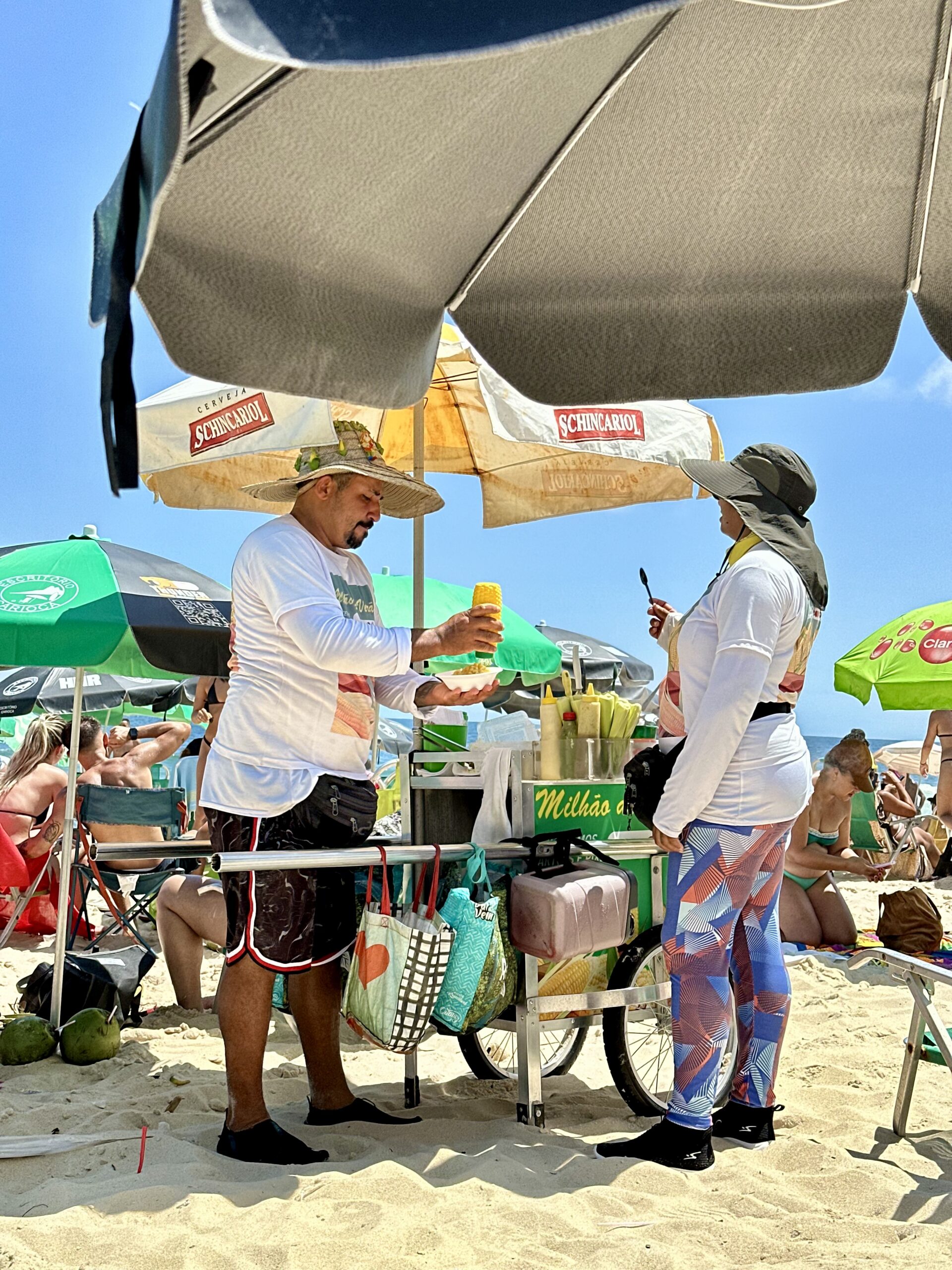
One of the things I absolutely loved about the beaches in Rio de Janeiro is how you really don’t need to bring anything with you, as everything you might need is sold by the beach vendors.
On the beach, you can buy cocktails, iced tea, beer, biscuits, açaí bowls, corn, grilled cheese, meat skewers, empanadas – and that’s just some of the food that is available. You can also buy swimsuits, towels, sunglasses, jewelry, and other clothes right there on the sand.
Even if you didn’t originally plan a beach day, you can easily get set up within minutes. I bought a new swimsuit and new towels for me and my partner, plus some extra towels to bring back as gifts for friends – the designs of the towels are amazing.
Bring a Refillable Water Bottle
When thinking about what to know before visiting Rio de Janeiro, staying hydrated needs to be high on your list.
The heat and humidity are no joke, and you’ll want to be drinking water constantly. While the tap water isn’t always drinkable straight from the faucet, almost every place we stayed at had a filtered tap or a water filter installed.
Bringing a refillable water bottle made it super easy to stay hydrated without having to buy plastic bottles all the time. It’s good for your wallet and good for the environment.

Toilets in Brazil: What You Need to Know
And lastly, in Brazil, it is customary not to throw toilet paper into the toilet.
The country’s sewage system is old, and the pipes are very narrow, which can easily lead to clogs if you flush paper. Instead, you’re expected to throw the used toilet paper into the small bin placed next to the toilet – it’s something small but definitely one of those things to know before visiting Rio de Janeiro that makes a big difference.

I hope that this article has helped you and given you a good understanding of how to plan your first trip to Rio de Janeiro and the things you need to know before you go. If you have any additional questions or comments, please let me know in the comment section below, and don’t hesitate to contact me.
If you like this post, please share it with your friends and follow Owl Over The World on Facebook, Instagram, and TikTok for more travel tips & inspiration.
Thank you for reading,
Bilyana
